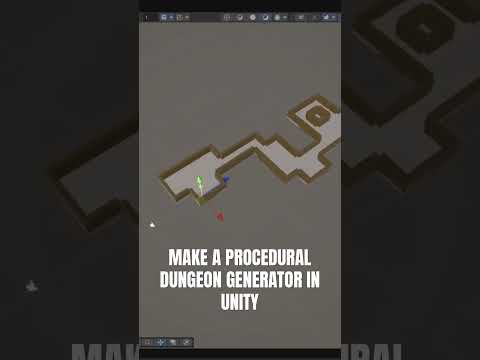





Intro
Procedural Content Generation is the automatic creation of game content using algorithms instead of manual design.
- Reduces development time.
- Enables infinite or highly variable content.
- Often used for terrains, levels, textures, and game worlds.
Resources
Core Principles
- Algorithm-driven: Content is generated by rules, formulas, or simulations.
- Randomness + Control: Use seeds to allow reproducibility while maintaining variation.
- Hierarchical Generation: Generate content in layers (e.g., world → region → terrain → details).
Common Techniques
- Noise Functions: Perlin, Simplex, Value noise → realistic terrains, clouds, textures.
- Grammar-based Systems: L-systems, shape grammars → trees, cities, procedural narratives.
- Cellular Automata: Simulate growth/erosion → caves, dungeon maps.
- Fractals: Recursive patterns → mountains, coastlines.
- Rule-based/Constraint Systems: Enforce gameplay or design rules.
Benefits
- Creates large, diverse, and replayable content.
- Saves time and resources for artists and designers.
- Encourages emergent gameplay through unpredictable environments.
Challenges
- Balancing randomness vs. playability.
- Controlling visual or gameplay quality.
- Debugging and testing generated content.
Applications
- Terrain generation in open-world games.
- Dungeons and levels in roguelikes.
- Textures and procedural art.
- Storylines or quests in RPGs.
Samples